
Two confident and opposite instructions circulate about this: take the plates because they belong to you, or leave them because they belong to the car. Neither is quite right, and the law is clearer than either.
Oregon's starting point is that the plates stay. ORS 803.530 says registration plates assigned to a vehicle “shall remain with the vehicle to which the plates are assigned”, valid only for the registration period they were issued for, except as the section itself provides.
So removing them is the exception, not the default — a choice the statute allows and DMV permits. That is the opposite of how this question is usually framed, and the framing matters: if you have already let the car go with the plates on it, you did the ordinary thing, not the careless thing.
QUICK ANSWER
Under ORS 803.530 the plates stay with the vehicle unless something in that section moves them. Oregon DMV says you may remove your license plates before selling — permission, not a recommendation, and DMV says nothing about tickets or towing in connection with it. The practical case for removing them is that a plate left on a car you no longer own stays associated with you until the buyer titles and registers it. Whichever you choose, the act that actually protects you is filing the DMV notice of sale within ten days.
01
What the law actually says
It is worth quoting, because almost every version of this question online paraphrases it wrongly in one direction or the other.
ORS 803.530 is titled “Period of validity; transfer; replacement”, and it begins from the vehicle rather than the owner: registration plates assigned to a vehicle by the Department of Transportation shall remain with the vehicle to which the plates are assigned, and are valid only during the registration period for which they were issued, except as provided in that section.
“Except as provided in this section” is doing real work — the section goes on to set out how plates may be transferred or replaced. So plates can move. They simply do not move by default, and they are not yours in the way a toll transponder is yours.
Oregon DMV's selling guidance sits on top of that as permission: “You may remove your license plates before selling your vehicle.” That is the whole of what DMV says on the subject in the selling context. It does not recommend removal, and it does not mention tickets, citations or towing anywhere in connection with it.
So the honest summary is: the default is that they stay, and you are allowed to depart from the default. Anyone telling you Oregon requires removal, or that DMV advises it, is adding something the sources do not say.
02
So why remove them at all? Our reasoning, not DMV's
There is a real case for taking them off, and it should be labelled as ours rather than dressed up as official guidance.
A plate is associated with a vehicle record that still names you until the buyer transfers the title. That gap is not hypothetical — it is the same gap the notice of sale exists to annotate, and nothing you do makes the buyer act faster.
Anything the plate accrues in that window arrives against the plate. That is the substance behind the tickets-and-towing worry, and it is a reasonable worry. It is simply not something DMV says.
For a car being scrapped rather than driven away, there is little reason to leave them on. The vehicle is not going to be registered by anyone.
Against that: if the buyer intends to drive it, the plates coming off creates a problem you have handed them, which is the next section.

03
If the car has already gone with the plates on it
This is the situation people are usually in when they look this up, and the reframe above is most of the answer.
You did the statutory default. The plates were assigned to that vehicle and the law says they remain with it. You have not broken a rule and there is nothing to undo.
We checked whether DMV publishes advice for this situation. It does not — the selling guidance says you may remove the plates before selling, and stops there. It does not describe what to do if you did not, which is worth saying plainly rather than inventing a procedure.
What is actually true about your exposure: the plates stay tied to a record that names you until the buyer titles and registers the vehicle. That is the same exposure you have from the title itself, and it has the same remedy.
So do the thing that works: file the notice of sale within ten days, with the buyer's legal name and address. It does not remove your name, and it does mean that anyone asking DMV who owns the vehicle is told a transfer was notified. That is the protection available to you, and it does not depend on where the plates are.
04
Moving plates to another vehicle: what it costs and what you lose
If you are keeping the plates for your next car, this is the part the page previously left vague and it has real conditions.
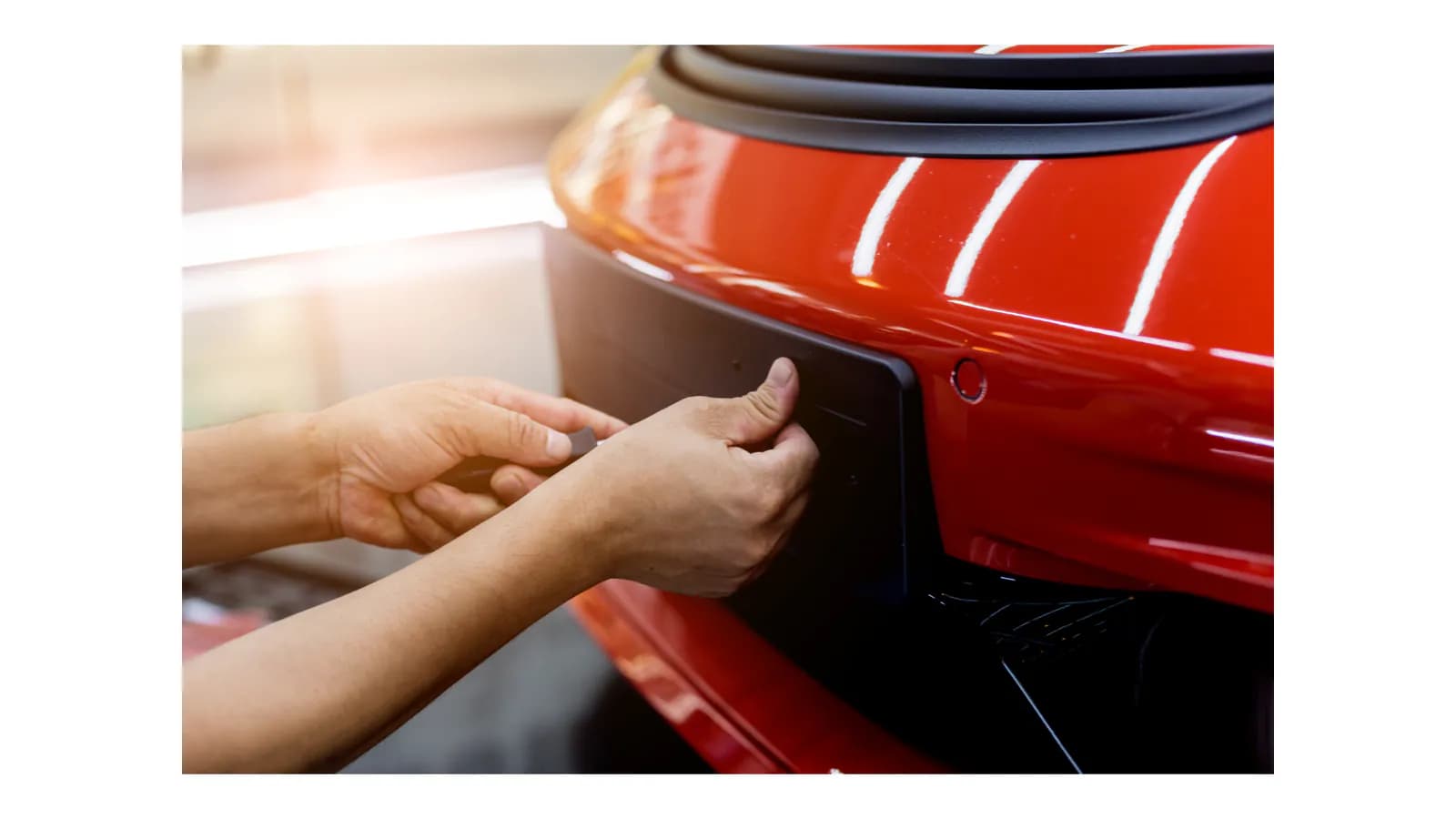
You may transfer plates to another vehicle if they are going on the same type of vehicle — motor-home plates to another motor home, for instance — and if they are a style DMV currently issues, or special or custom plates, and if they are readable.
The fee is $30, paid by check or money order to “DMV”, mailed with the application to DMV Services, 1905 Lana Ave NE, Salem OR 97314.
Whether the remaining registration period travels with the plates depends on who owned the vehicle they came off. If you are the current or previous owner listed on that title, the registration period listed on the plates transfers with them. If you are not, you have to meet all registration requirements and pay registration fees on top of the $30.
And there is a case where the period simply ends. ORS 803.530 provides that where plates are transferred to a vehicle not owned by the same person, the remaining registration period ceases for both vehicles — the one receiving the plates and the one they came off. Note the test is common ownership, not whether money changed hands: moving plates onto a car belonging to someone else ends the period either way.
05
What the plates do not do
Worth stating because the plate is the most visible thing on the car and gets treated as though it carries more weight than it does.
Removing the plates does not report the sale. It is not a notice to DMV and nothing about it reaches the record.
Removing the plates does not transfer the title. Ownership moves on the title, and nowhere else.
Leaving the plates on does not transfer anything either. The buyer does not acquire the registration by acquiring the metal.
And do not sell or hand over a plate separately from the vehicle. Plates are assigned to a vehicle by DMV; they are not a thing to pass around on their own.
06
Decide before the truck arrives
Make the choice in advance and tell the buyer, because the moment of collection is the wrong time to discover you disagree about it.
If the buyer intends to drive the vehicle away, plates coming off is their problem to solve before it moves — and Oregon publishes a specific answer. A Light Vehicle Trip Permit is $35 for 21 consecutive days and covers unregistered passenger vehicles of 10,000 pounds or less, along with light trailers, mopeds and motorcycles. A buyer is limited to two permits per vehicle in any 12-month period, so it is a bridge to registering rather than a substitute for it.
If it is going onto a truck, it does not need to be driven and the plates are not part of the loading question at all.
Either way, note what you did. Write down whether the plates came off, and file the notice of sale within ten days. The record of your decision is worth more than the decision itself.
FREQUENTLY ASKED QUESTIONS
Do I have to remove my plates when selling a car in Oregon?
No. ORS 803.530 says plates remain with the vehicle they are assigned to unless that section moves them, so staying is the default. Oregon DMV says you may remove them before selling — that is permission, not a requirement and not a recommendation.
Does Oregon DMV recommend removing the plates?
No. DMV says you may remove your license plates before selling your vehicle and says nothing further — no recommendation, and no mention of tickets, citations or towing in connection with it. The practical case for removing them is ours, not DMV's.
I already let the car go with the plates on. What now?
You did the statutory default, so there is nothing to undo. DMV does not publish advice for this situation — its selling guidance covers removing them beforehand and stops. What is true is that the plates stay tied to a record naming you until the buyer titles the vehicle, and the fix for that is the notice of sale, filed within ten days.
Do the plates belong to me or to the car?
Neither framing is quite right. DMV assigns plates to a vehicle and the statute says they remain with it, but the same section sets out how they may be transferred or replaced. They are not yours to pass around, and they are not permanently welded to that car either.
Can I put my plates on my next car?
Often yes, if they are going on the same type of vehicle, are a style DMV currently issues or are special or custom plates, and are readable. The transfer fee is $30 by check or money order to DMV.
Does my remaining registration go with the plates?
It depends who owned the vehicle they came off. If you are the current or previous owner on that title, the registration period listed on the plates transfers with them. If you are not, you must meet all registration requirements and pay registration fees as well as the $30.
What if the plates go onto a vehicle with a different owner?
Then the remaining registration period ceases for both vehicles — the one receiving the plates and the one they came off. ORS 803.530 provides for that specifically, so time already paid for does not survive a change of owner.
Does taking the plates off report the sale?
No. It is not a notice to DMV, it does not transfer the title, and nothing about it reaches the vehicle record. File the notice of sale within ten days and release the title properly.
The buyer wants to drive it away. What about plates?
That is the buyer's to settle before the vehicle moves. Oregon's Light Vehicle Trip Permit is $35 for 21 consecutive days and covers unregistered passenger vehicles of 10,000 pounds or less. Note the cap: two permits per vehicle in a 12-month period, so it buys time rather than replacing registration.
Can I sell the plates separately?
No. Plates are assigned to a vehicle by DMV and are not an item to sell or hand on by themselves.
PRACTICAL CHECKLIST
Before the car leaves
- Decide about the plates in advance, not on the driveway
- Tell the buyer what you have decided
- Remember the default: plates stay with the vehicle unless you move them
- If the buyer will drive it away: a Light Vehicle Trip Permit is $35 for 21 days
- Do not hand over or sell a plate separately from the vehicle
- Write down what happened to the plates
- File the DMV notice of sale within ten days either way
- Keep the notice confirmation with your sale records
JUNK-CAR SERVICE AREAS FOR THIS GUIDE
- Selling a car in PortlandPortland pickups and paperwork.
- Selling a car in SalemSalem sales and DMV follow-up.
- Selling a car in EugeneEugene collection and records.
- Selling a car in BendBend pickups across the region.
- Selling a car in MedfordMedford sales in any condition.
- Selling a car in BeavertonBeaverton pickup, towing on an accepted offer.
- Selling a car in GreshamGresham collection and handoff.
- Selling a car in HillsboroHillsboro sales and documentation.
USEFUL OREGON RESOURCES
- The Oregon DMV Notice of Sale, in Ten DaysThe act that actually protects you, whatever you did with the plates.
- Bill of Sale vs Title in OregonWhich document proves what, and why plates prove nothing.
- Oregon Vehicle Bill of SaleThe document itself, and what must be on it.
- Where to Sign an Oregon Car TitleWhere ownership actually moves.
OFFICIAL SOURCES
Rules, forms, fees, and program eligibility can change. Use these primary sources to confirm your situation.
- ORS 803.530: Period of validity; transfer; replacement (read at oregon.public.law; the legislature's own site was unreachable)
- Oregon DMV: Vehicle Trip Permits
- Oregon DMV: Buying or Selling a Vehicle
- Oregon DMV: Vehicle Registration and Plate Transfer
- Oregon DMV: License Plates
Prepared and reviewed on September 9, 2026 against ORS 803.530, Oregon DMV buying and selling guidance, the DMV registration and plate-transfer pages, and the DMV plates page. The statute was read at a public mirror because the legislature's own site was unreachable; that is a secondary source and is noted as such. General seller information, not legal advice.
Reviewed by CashMyCarOregon Editorial Team: Oregon vehicle seller research and editorial review